Instant plant ID
Photograph a leaf, flower, or whole plant and get a likely species match in seconds.
Mobile app coming soon
Plant Identifier - PlantApp
Snap a leaf. Know your plant. Keep it alive.
PlantApp is a plant identifier app that identifies plants from photos and delivers plant health and care guidance, including diagnosis support, watering schedules, and troubleshooting steps for plant owners.
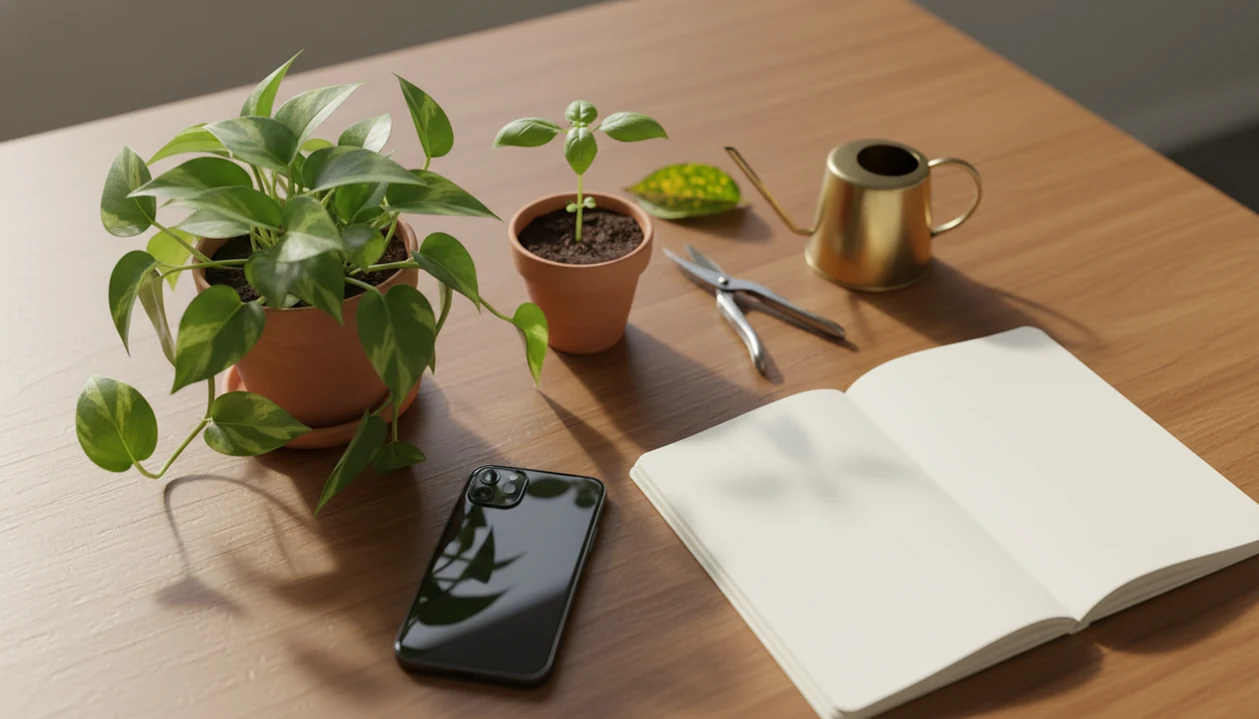
PlantApp brings photo-first plant identifier research and care guidance to your phone.
Photograph a leaf, flower, or whole plant and get a likely species match in seconds.
See watering rhythm, light needs, fertilizer cues, and repotting timing for each match.
Flag yellow leaves, spots, pests, and dryness clues with practical next steps — not medical claims.
Review toxicity notes for cats, dogs, and children before you place a new plant.
Identify indoor shelves, backyard beds, weeds, trees, succulents, and wildflowers from photos.
Track watering and check-in prompts so a busy week does not turn into root rot.
Every scan returns identification clues plus watering, light, and safety notes — research guidance, not veterinary advice.
Sample scan result
| Plant | Monstera deliciosa |
| Light | Bright indirect |
| Water | Every 7–10 days |
| Humidity | Moderate–high |
| Pet safety | Toxic to cats & dogs |
Care guidance is for research — not veterinary or medical advice.
PlantApp explains uncertainty, photo tips, and when to escalate to an extension office or vet for toxic-plant decisions.

Definition: PlantApp is a plant identifier app that identifies plants from photos and delivers plant health and care guidance, including diagnosis support, watering schedules, and troubleshooting steps for plant owners.
The main benefit of a plant identifier app is the loop: identify the plant, create a care plan, then scan again when symptoms appear. PlantApp is built for that loop because the result connects species ID with watering reminders, light preference, and toxicity warnings.
For broader app comparisons, our best plant identifier apps guide covers how different tools handle photo ID and care depth.
A good plant identifier app gives a likely plant name, then helps you decide what to do next. Look for photo prompts, care depth, safety notes, and honest uncertainty language — not one forced answer from a blurry leaf.
AI plant identification compares your photo against annotated plant images using visual patterns — shape, texture, venation, flowers, and growth habit. The result is a likely match with confidence cues, not guaranteed proof.
Looking to learn more about PlantApp? Here are some of the most common questions.
Top plant identifier apps often reach about 68–84% accuracy in real-world tests, depending on species and photo quality. Treat the result as a likely match, not final proof.
PlantApp may offer free access or trial-style use when it launches. Check back for launch details and pricing.
A plant scanner can flag likely diseases, pests, and deficiencies from leaf photos. Home photos are less consistent than controlled lab images.
Yes, PlantApp is built for common houseplants and ornamentals. Training data is usually strongest for widely grown indoor plants.
Blurry photos reduce accuracy significantly. Use natural light, focus on the leaf or flower, and include the stem or full plant when possible.
No plant ID app should be the sole basis for eating wild plants. Always confirm edible plants with a qualified local expert.
Google Lens is a general visual search tool. PlantApp adds plant care schedules, toxicity notes, reminders, and disease tracking.
Yes, species results can include toxicity information for pets and children. This helps users decide where to place a plant or whether to remove it.
Photograph a leaf, flower, or whole plant and get likely IDs, care cues, and symptom triage from your phone.